Pre-Nursery to Class 5.
From Pre-Nursery to Class 5, children learn through activities, with modern teaching methods and a big open play area.

Pre-Nursery, Nursery, LKG & UKG
From Pre-Nursery through the early years, children learn through play and activity. These are the years for first habits, with trained and caring teachers beside them.
Class 1 to Class 5
From Class 1 to Class 5, children keep learning by doing. Modern teaching methods guide the primary years, and the open play area stays part of every day.
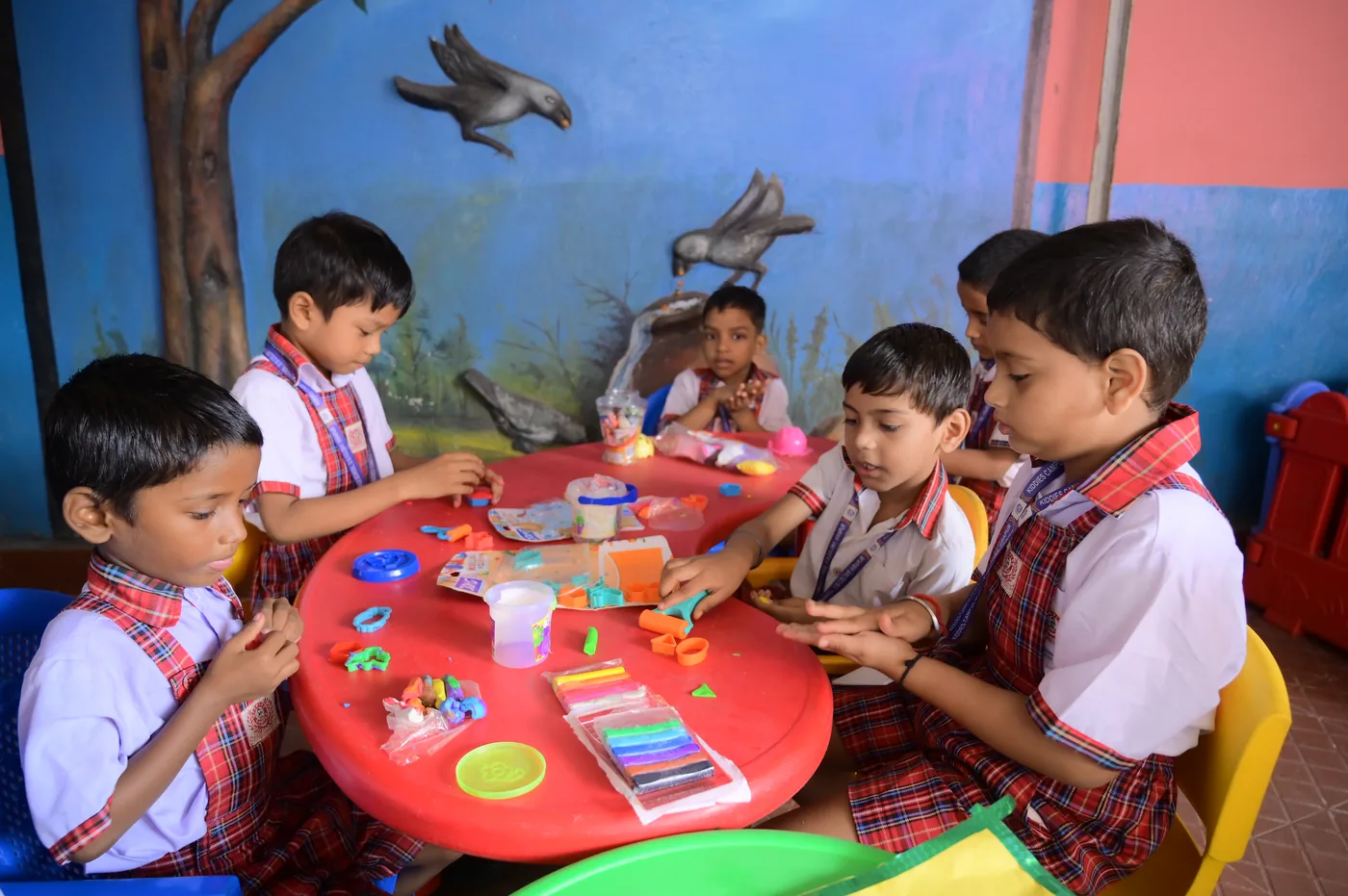
Learning by doing.
- Activity-based learning. Children learn by doing, through activities in class.
- Modern teaching methods. Teachers use modern methods made for young children.
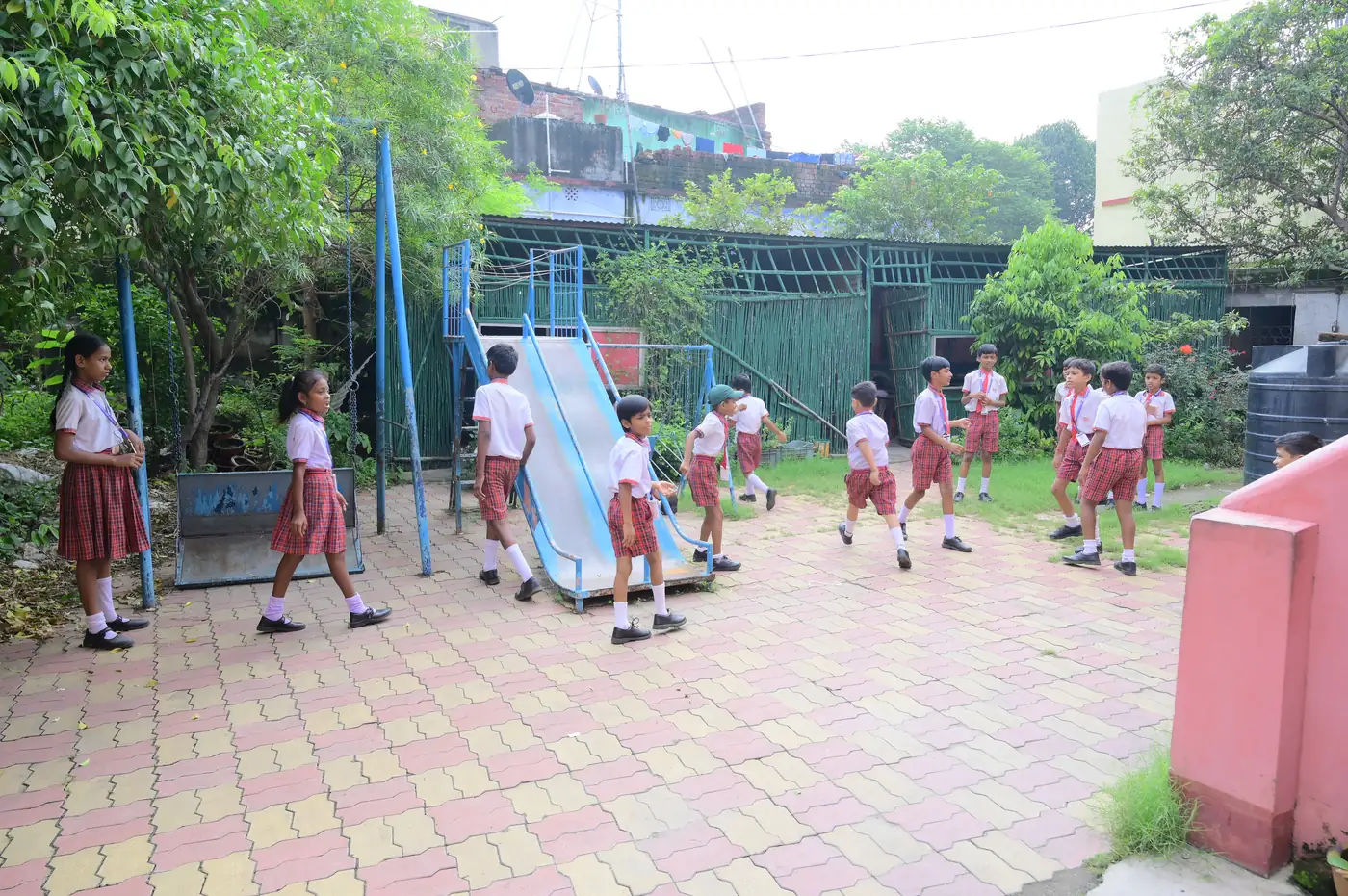
- A big open play area. A large, open space where children run, climb and play.
What children work on.
Children grow a few skills at a time. These notes describe what children usually work on at each stage, in line with general early-years and primary practice. They are a guide for parents, not our syllabus.
Pre-NurseryFirst words, songs, and comfort in a group.
- Language
- Listen, name familiar things, and join simple songs.
- Numbers
- Match objects, sort by colour, and notice more or less.
- Body & hands
- Hold a crayon, stack blocks, and move through play.
- With others
- Stay near a trusted adult and begin to share space.
NurseryShort talk, small counts, and hands-on play.
- Language
- Speak in short sentences and follow a simple instruction.
- Numbers
- Count small sets and match a number to objects.
- Body & hands
- Draw lines, tear paper, and climb or run in play.
- With others
- Take a turn, wait, and play beside other children.
LKGLetter sounds, early writing, and number sense.
- Language
- Hear letter sounds, try letters, and retell a short story.
- Numbers
- Count further, compare groups, and write the first numerals.
- Body & hands
- Use scissors with help, colour a shape, and balance in play.
- With others
- Listen in a circle and help a friend with a task.
UKGReading readiness, writing, and simple number work.
- Language
- Blend simple sounds, read short words, and write a sentence.
- Numbers
- Add and take away with objects, and talk about tens.
- Body & hands
- Write with a steadier grip and join games that need balance.
- With others
- Follow shared routines and speak in a small group.
Class 1-2Reading, writing, and everyday number work.
- Language
- Read short passages and write a few clear sentences.
- Numbers
- Add, subtract, and use simple measurement in daily tasks.
- Body & hands
- Write for longer, cut with care, and join running games.
- With others
- Work in pairs, listen, and look after shared materials.
Class 3-5Longer reading, written work, and clearer reasoning.
- Language
- Read longer texts and write a paragraph with one clear idea.
- Numbers
- Multiply, divide, and solve word problems step by step.
- Body & hands
- Write with control and join team games and craft work.
- With others
- Discuss ideas, take a role in a group, and settle small disputes.
Ask us how we teach each stage at Kiddies Campus School.
A day at Kiddies Campus.
Every day here follows a steady rhythm: a warm welcome, hands-on work, and time to play. The early years lean on songs, clay and craft. The primary years add clearer class work, in the same spirit.
The early years
- A warm welcomeTeachers greet each child with the same motherly care the school is known for.
- Action songs togetherChildren sing action songs and move together with their teacher.
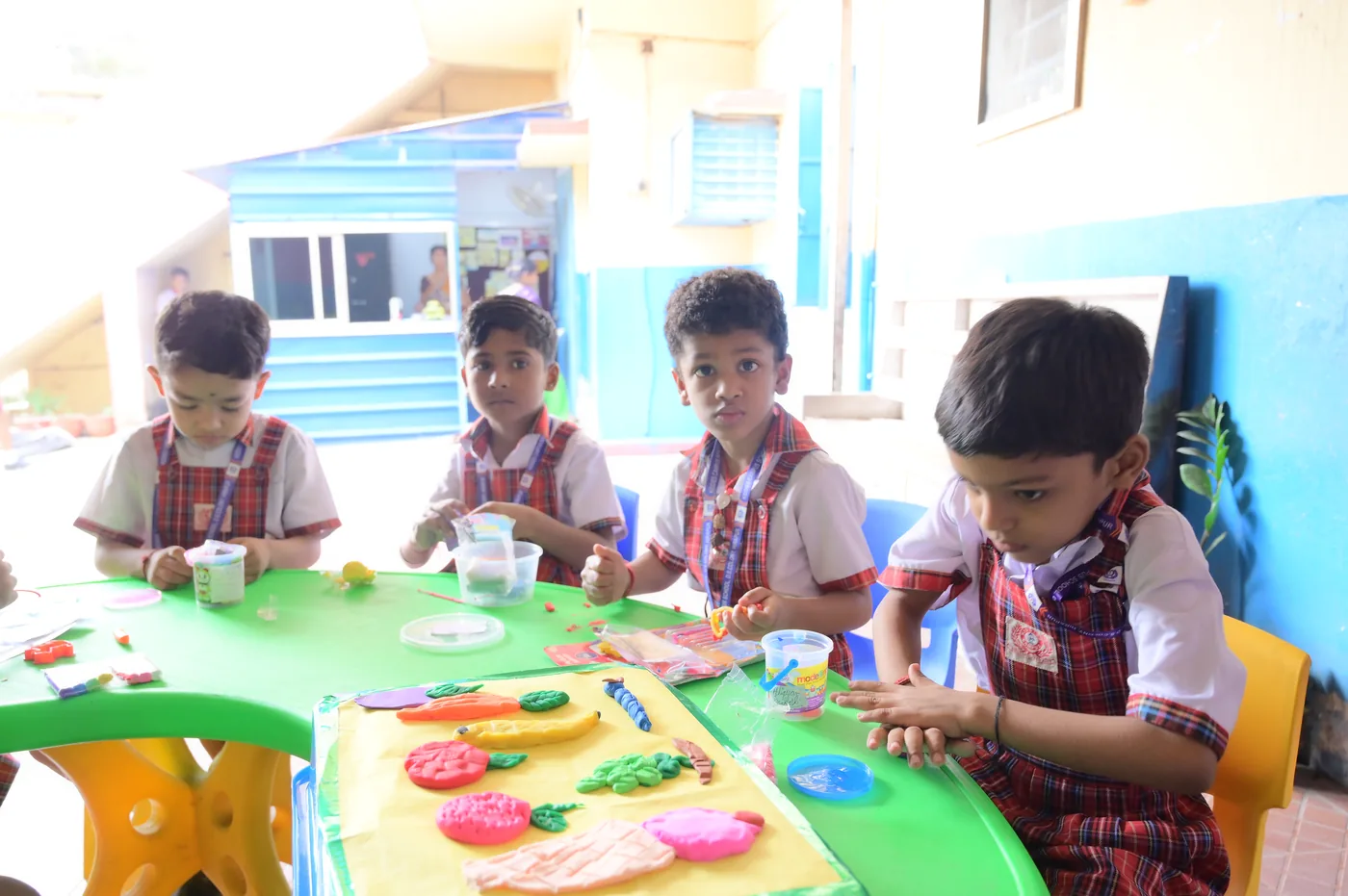
- Clay, craft, colourClay, craft, and colours happen at activity tables, with a teacher close by.
- Indoor play cornerThe indoor play corner has slides and rockers for free play.
- The open play areaThe big open play area gives children room to run, climb, and use the slides.
- A gentle closeTeachers help children settle before they leave, calm and ready for home.
The primary years
- Settling into classCaring teachers help each child arrive ready for the day's class work.
- Clear class lessonsModern teaching methods keep lessons simple, active, and easy to follow.
- Making and doingCraft, colour and hands-on work still sit alongside class lessons.
- Play beyond the classroomChildren step out to the big open play area and the slides.
- Practice with teachersTrained teachers stay near while children try new work and ask questions.
- A calm send-offTeachers see each child off with the same care they offered at arrival.
Ask us about the school day and about timings when you call or visit. 96546 08326
Children learn best by playing.
India’s National Education Policy 2020 notes that over 85% of a child’s brain development happens before the age of six. It asks for early learning that is flexible, play-based, activity-based and inquiry-based: letters, numbers, colours, shapes, puzzles, drawing, craft, music and movement.
That is what parents see at Kiddies Campus: clay and craft at the activity tables, colours, action songs and a big open play area. Visit and see a class at work, and ask our teachers how they teach each stage.
- NEP 2020: over 85% of a child’s brain development happens before age six.
- NEP 2020: the early years should be play-based, activity-based and inquiry-based.
- The Foundational Stage covers ages 3 to 8: three pre-school years, then Classes 1 and 2.
- NCF-FS 2022 puts play at the centre, and says tests and exams do not suit ages 3 to 8.
Sources: National Education Policy 2020 (Ministry of Education, paras 1.1–1.2, 4.1) · National Curriculum Framework for the Foundational Stage 2022 (NCERT). General guidance, quoted in plain words; not a claim of affiliation.
Transport available.
Transport is available. Please call 96546 08326 or 0326-2310966 to ask about routes near you.
Admissions are open for 2027–28.
Call or WhatsApp us, or send an enquiry and we will call you back.